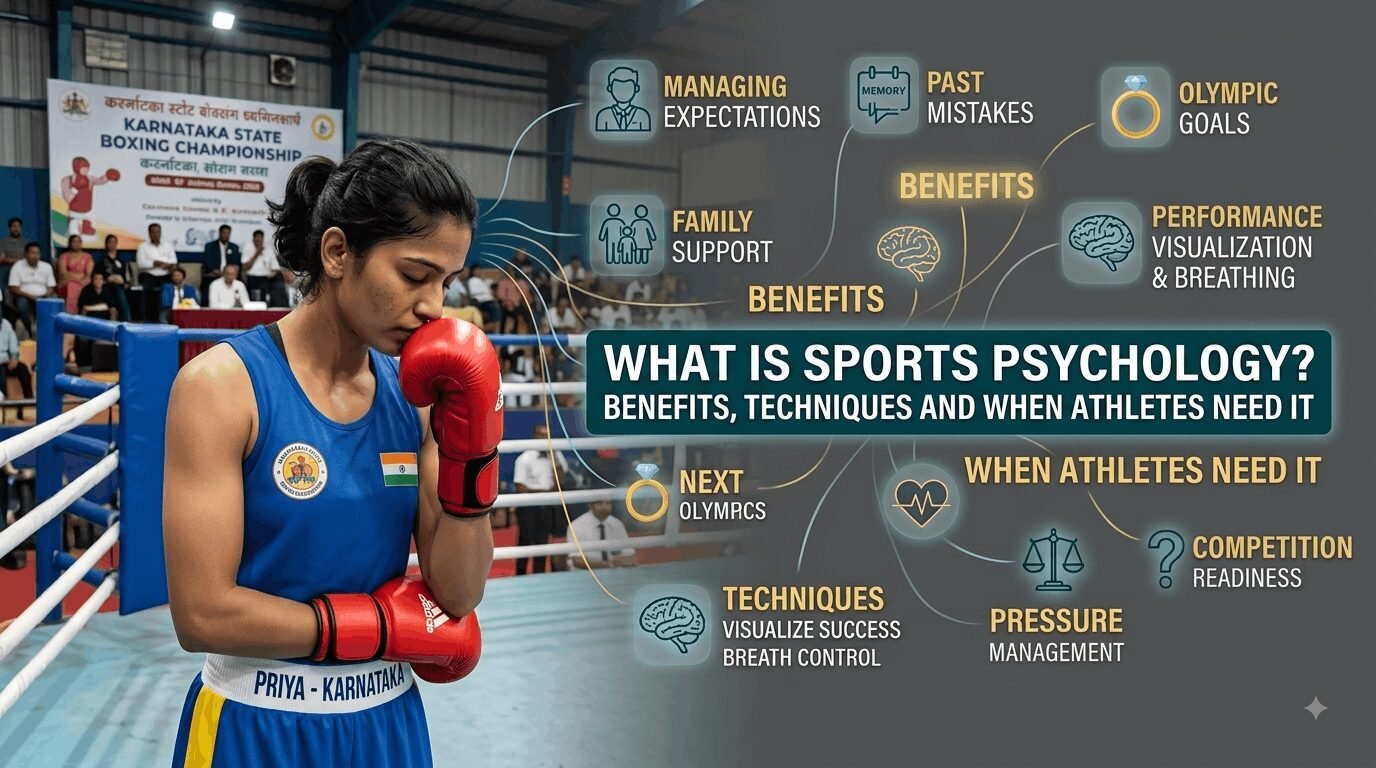
Elite athletes don’t just train their bodies, they train their minds with equal intent.
At the highest level, performance is less about ability and more about execution under pressure. The athletes who stand out are the ones who can stay composed, focused, and confident when it matters most.
These techniques are rooted in sports psychology and are widely used by athletes working with a sports psychologist or mental performance coach to improve consistency, confidence, and performance.
Here are five proven mental training techniques used by elite athletes and how youcan apply them.
1. Visualization
What it is
Mentally simulating your performance in advance including movements, scenarios, and pressure situations.
Why it works
Visualization activates the same neural pathways as real execution. It builds familiarity, sharpens focus, and reduces uncertainty before competition.
How to apply it
Spend 5–10 minutes daily visualizing:
- Your ideal performance
- Challenging moments (mistakes, pressure situations)
- How you respond and recover
Remember the goal is not perfection, it’s preparedness.
2. Structured Goal Setting
What it is
A clear system of outcome, performance, and process goals that guide your training.
Why it works
It shifts your focus from uncontrollable outcomes to controllable actions, reducing pressure and improving consistency.
How to apply it
Break your goals into:
- Outcome goals → What you want to achieve
- Performance goals → Metrics to improve
- Process goals → Daily actions and habits
Focus on process — that’s where real progress happens.
3. Breathing Control
What it is
Using breathing techniques to regulate stress, nerves, and physical tension.
Why it works
Pressure triggers a physical stress response — increased heart rate, tightness, and reduced clarity. Breathing helps reset your system and regain control.
How to apply it
Use simple techniques like:
- Box breathing (inhale–hold–exhale–hold)
- Deep diaphragmatic breathing
Practice regularly and use it during high-pressure moments.
4. Positive Self-Talk & Cognitive Reframing
What it is
Replacing negative or distracting thoughts with constructive, performance-focused ones.
Why it works
Your internal dialogue directly impacts confidence, focus, and decision-making. Reframing thoughts helps reduce fear of failure and improves composure.
How to apply it
Shift from:
- ❌ “Don’t mess this up”
- ✅ “Focus on the next action”
Keep your self-talk simple, neutral, and actionable.
5. Pre-Performance Routines
What it is
A consistent sequence of actions you follow before competition.
Why it works
Routines create familiarity in unpredictable situations. They reduce anxiety and help you enter a focused, ready state.
How to apply it
Build a simple routine that may include:
- Music or mental cues
- Warm-up movements
- Breathing or visualization
Repeat it consistently before performance.
Why Mental Training Matters
Many athletes today are actively investing in mental training techniques to handle pressure, improve consistency, and build confidence.
Working with a sports psychologist or mental performance coach helps translate these techniques into real match-day performance — where it matters most.
If you’re serious about improving performance, don’t leave your mindset to chance.
Get in touch with Nudge Sports and work with experienced sports psychologists who help athletes build focus, confidence, and perform under pressure.