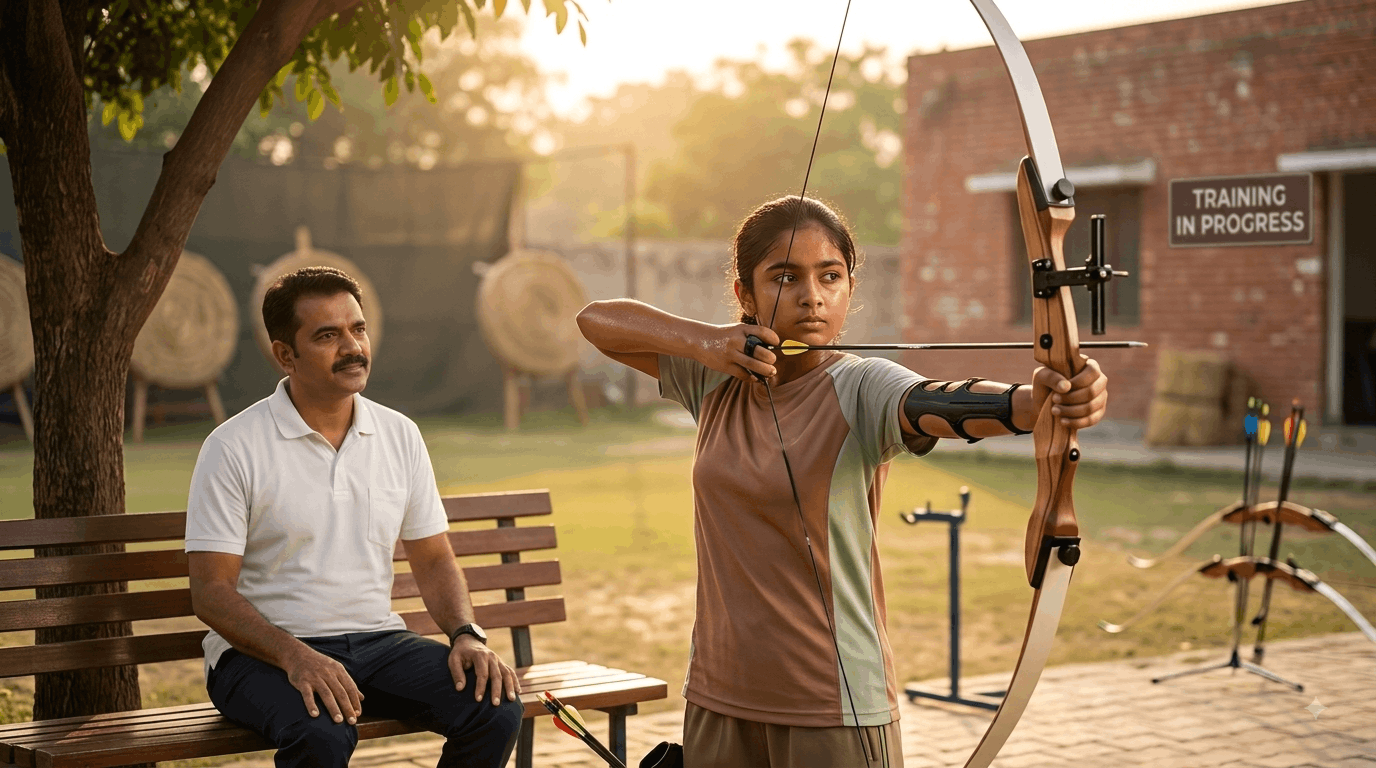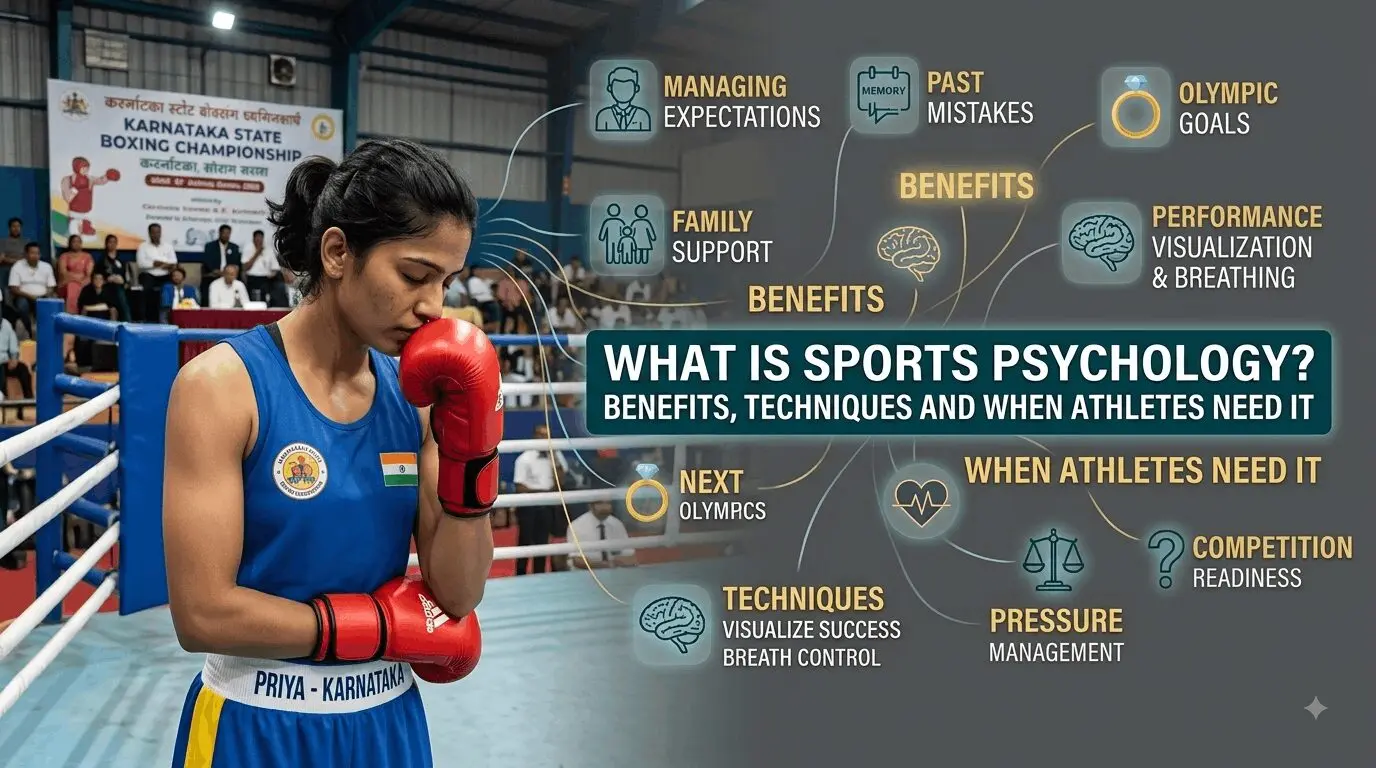
Young athletes are often expected to manage competition, schoolwork, coaching feedback, selection pressure and other people’s expectations—all while they are still developing emotionally.
Physical and technical training alone may not prepare a child for these demands.
Mental conditioning for young athletes is the age-appropriate training of psychological skills such as confidence, focus, emotional awareness, goal-setting, resilience and responding to pressure. It helps children understand their thoughts and emotions while learning practical ways to perform, recover from mistakes and enjoy their sport.
Mental conditioning should never be used to force a child to tolerate an unhealthy environment. Its purpose is to support the child’s development, well-being and independence.
Quick answer: Parents can support mental conditioning for young athletes by praising effort and learning, reducing result-based pressure, encouraging simple routines, teaching slow breathing, allowing mistakes and helping the child focus on controllable actions. The child’s well-being and enjoyment should remain more important than rankings or trophies.
Table of Contents
- What is mental conditioning for young athletes?
- Why young athletes need mental skills
- Mental conditioning versus mental toughness
- Nine mental skills young athletes can develop
- How parents affect confidence and pressure
- What to say before and after a match
- A weekly mental-conditioning routine
- Common mistakes parents should avoid
- When a child may need professional support
- Online versus in-person mental conditioning
- Frequently asked questions
What Is Mental Conditioning for Young Athletes?
Mental conditioning for young athletes involves teaching children and teenagers practical psychological skills that support both performance and well-being.
These skills may include:
- Understanding emotions
- Focusing on the present task
- Building realistic confidence
- Setting useful goals
- Managing pre-match nerves
- Responding to mistakes
- Communicating with coaches
- Maintaining motivation
- Handling selection and non-selection
- Balancing sport with school and personal life
Just as strength, flexibility and technique develop through repeated training, mental skills also require practice.
A single motivational conversation before a tournament will not create lasting confidence. Mental conditioning should be integrated gradually into training, competition and everyday routines.
Why Do Young Athletes Need Mental Conditioning?
Young athletes can face pressure from several directions:
- Their own expectations
- Parents
- Coaches
- Teammates
- School
- Selection trials
- Rankings
- Social media
- Comparison with other athletes
- Financial or time investments made by the family
Some pressure is a normal part of competitive sport. However, children may not yet have the emotional vocabulary or skills to understand what they are experiencing.
A young athlete may say:
- “I don’t want to play.”
- “My stomach hurts.”
- “Everyone is better than me.”
- “The coach will be angry.”
- “You will be disappointed if I lose.”
- “I always ruin important matches.”
These statements may be interpreted as laziness or a poor attitude. In reality, they may indicate anxiety, fear of failure, low confidence, exhaustion or uncertainty.
Mental conditioning for young athletes gives children a structured way to identify these challenges and respond to them.
Mental Conditioning vs Mental Toughness
Mental conditioning and mental toughness are related, but they should not be confused with suppressing emotions or tolerating harmful treatment.
Healthy mental toughness may involve:
- Continuing after a manageable setback
- Asking for help
- Staying focused during pressure
- Accepting constructive feedback
- Trying again after a mistake
- Making a difficult but healthy decision
- Recognising when rest is needed
Mental toughness does not mean:
- Never feeling nervous
- Playing through every injury
- Ignoring pain
- Accepting humiliation
- Hiding mental-health concerns
- Training without adequate recovery
- Obeying adults without question
- Continuing in an unsafe environment
A mentally strong young athlete can say, “I am nervous, but I know what to focus on.” They can also say, “Something feels wrong, and I need help.”
Nine Benefits of Mental Conditioning for Young Athletes
1. Building Confidence Based on Preparation
Young athletes often connect confidence with results.
They may think:
- “I am good only when I win.”
- “I am confident only when the coach praises me.”
- “One bad match means I am not talented.”
This creates fragile confidence because results and other people’s reactions cannot be completely controlled.
More reliable confidence can be built from:
- Preparation
- Effort
- Skill improvement
- Keeping commitments
- Recovering after mistakes
- Trying difficult tasks
- Learning from previous experiences
Parents can help by asking:
- “What did you prepare well?”
- “Which skill has improved?”
- “What challenge did you handle better today?”
- “What did you do even though you felt nervous?”
The aim is not to give constant empty praise. It is to help the child identify real evidence of progress.
2. Improving Focus and Concentration
Children can become distracted by:
- Scores
- Crowd noise
- Parents watching
- Coach reactions
- Previous mistakes
- Fear of losing
- Other athletes’ performance
- Thoughts about selection
Focus does not mean concentrating perfectly throughout an entire event. It means noticing distraction and returning attention to the relevant task.
A young cricketer may focus on watching the next ball. A swimmer may focus on the start routine. A footballer may scan before receiving a pass.
Parents can ask the child to choose one or two focus cues before competition:
- “Watch the ball.”
- “Strong start.”
- “Move my feet.”
- “Breathe and reset.”
- “Communicate early.”
Short cues are generally easier to use than long technical instructions.
3. Managing Pre-Match Pressure
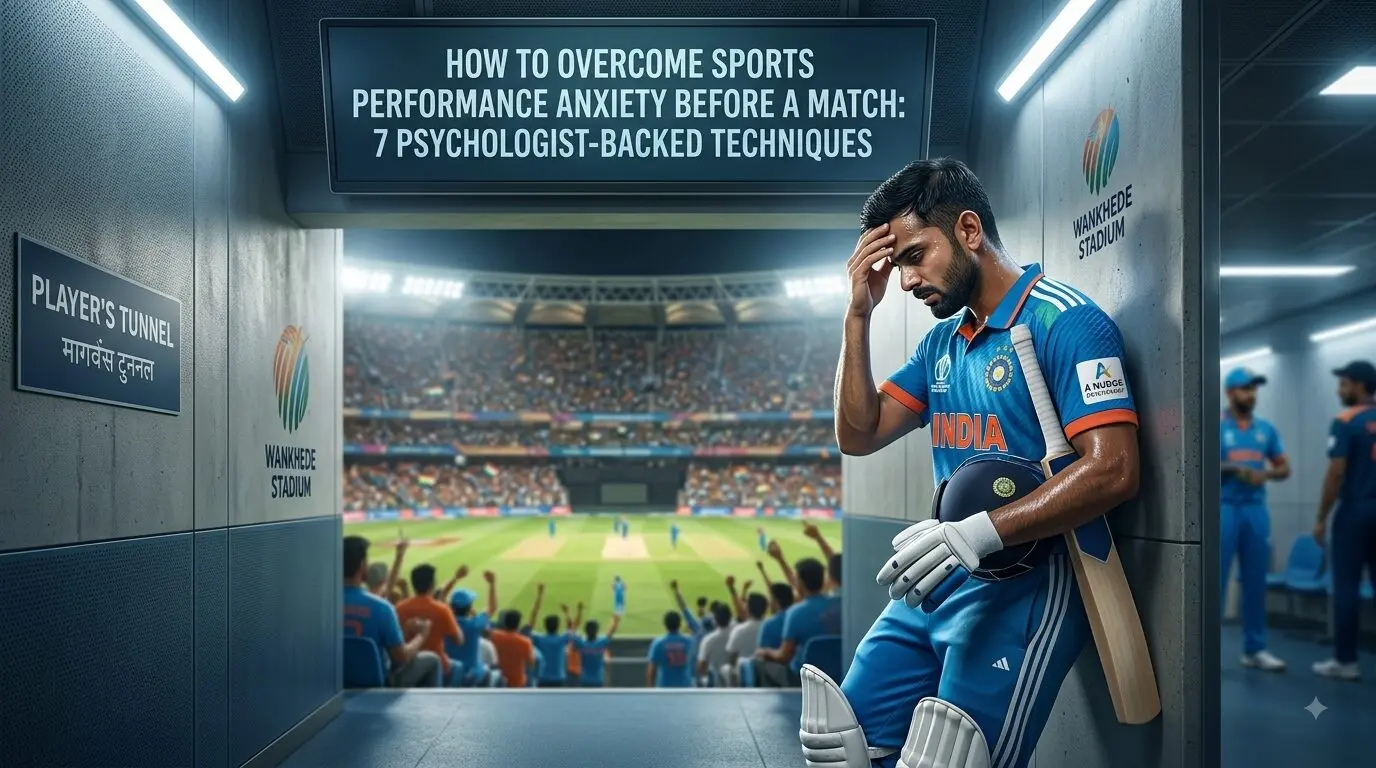
Young athletes may experience sports performance anxiety through:
- Rapid breathing
- Sweating
- Nausea
- Shaking
- Muscle tension
- Irritability
- Difficulty sleeping
- Avoiding competition
- Constantly seeking reassurance
Parents should avoid saying only, “Don’t be nervous.” The child may not know how to stop the feeling.
Instead, give the child a specific action:
- Relax the shoulders.
- Take five gentle breaths.
- Feel both feet on the ground.
- Identify one controllable task.
- Begin the normal warm-up routine.
The goal is not to remove every nervous feeling. It is to teach the child that they can still act effectively while feeling nervous.
4. Responding to Mistakes
Many young athletes believe good players should not make mistakes. After an error, they may become embarrassed, angry or afraid to try again.
Mental conditioning teaches a simple reset routine.
A Three-Step Reset for Young Athletes
Release: Take one slow breath or shake out physical tension.
Refocus: Use a phrase such as “next ball,” “next point” or “back to position.”
Recommit: Choose the next action and complete it fully.
Parents and coaches should respond to mistakes calmly. If adults react dramatically, the child may learn that mistakes are dangerous rather than useful for learning.
5. Developing Productive Self-Talk
Young athletes may speak to themselves more harshly than they would speak to a teammate.
Unhelpful self-talk:
- “I am terrible.”
- “I always fail.”
- “Everyone is better than me.”
- “I cannot make another mistake.”
Productive alternatives:
- “One mistake does not decide the match.”
- “I can focus on the next action.”
- “I have practised this.”
- “Breathe and try again.”
- “Stay brave and committed.”
The statement should be realistic. Telling a child to repeat “I am the best” may not help if they do not believe it.
Parents can model productive self-talk in everyday life:
“That did not go as planned. I’m disappointed, but I can learn from it.”
The Association for Applied Sport Psychology recommends helping young athletes develop productive self-talk while allowing them to take greater ownership of solving performance challenges.
6. Setting Healthy Goals
Children may focus only on outcomes:
- Win the tournament
- Score the most runs
- Get selected
- Reach a particular ranking
- Beat a specific opponent
Outcome goals can be motivating, but they are not fully controllable.
Young athletes also need process goals.
Outcome goal | Process goal |
Win the match | Complete the pre-match routine |
Score more runs | Watch each ball closely |
Get selected | Attend training consistently and apply feedback |
Improve ranking | Practise one priority skill every week |
Avoid mistakes | Reset effectively after each mistake |
Parents should allow the child to contribute to their goals. Goals imposed entirely by adults may reduce ownership and motivation.
7. Developing Emotional Awareness
Young athletes need language for emotions.
Instead of labelling a child as:
- Difficult
- Lazy
- Too sensitive
- Mentally weak
- Overconfident
- Unmotivated
Ask:
- “What are you feeling?”
- “Where do you notice it in your body?”
- “What happened just before the feeling started?”
- “What do you need right now?”
- “Would you like help or time to think?”
Emotional awareness helps children recognise patterns. A child may discover that they become anxious when a particular person watches, when the coach mentions selection or when they have not slept properly.
The objective is not to analyse every emotion. It is to help the child understand that emotions provide information and can be managed safely.
8. Maintaining Motivation and Enjoyment
Children may lose motivation because of:
- Repetitive training
- Excessive competition
- Lack of playing time
- Negative coaching
- Social comparison
- Injury
- Academic pressure
- Fear of disappointing adults
- Lack of rest
- No longer enjoying the sport
Not every drop in motivation requires a stricter schedule. Sometimes the child needs recovery, variety, greater ownership or an honest conversation about whether they still enjoy participating.
Parents can ask:
- “What do you enjoy most about your sport?”
- “What feels difficult right now?”
- “Is there anything you would like to change?”
- “What goal matters to you?”
- “Do you feel heard by your coach?”
Enjoyment and competitive ambition can exist together. A serious young athlete is still a child who needs friendships, education, rest and interests outside sport.
9. Building Independence and Decision-Making
Mental conditioning for young athletes should gradually make the child less dependent on adult instructions.
Parents can encourage independence by allowing children to:
- Pack their equipment
- Choose personal performance cues
- Speak with the coach appropriately
- Reflect on their performance
- Set process goals
- Decide when they are ready to discuss a match
- Develop their own pre-match routine
- Identify possible solutions
Instead of immediately giving an answer, ask:
- “What do you think happened?”
- “What options do you have?”
- “What would you like to try next time?”
- “What support would help?”
Open-ended questions encourage self-reflection and teach children that they can influence their own development.
How Parents Influence Confidence and Pressure
Parents may not intend to create pressure. However, children can interpret certain behaviours differently from how adults intend them.
Pressure may increase when parents:
- Discuss results throughout the week
- Compare the child with teammates
- Display visible anger after mistakes
- Give instructions during competition
- Criticise coaches in front of the child
- Connect family sacrifices with performance
- Withdraw affection after a loss
- Speak constantly about selection or scholarships
- Analyse the match immediately afterwards
- Treat every competition as extremely important
The Association for Applied Sport Psychology advises parents to prioritise the child’s total development and maintain balance between sport, education, friendships and other interests.
Children should know that the parent-child relationship will not change according to the scoreboard.
What Parents Should Say Before a Match
Before competition, keep communication simple.
Helpful statements include:
- “Trust what you have practised.”
- “Focus on one action at a time.”
- “You do not have to be perfect.”
- “Be brave enough to make decisions.”
- “Mistakes are part of competing.”
- “I enjoy watching you play.”
- “Whatever the result, we are proud of your effort.”
Avoid saying:
- “You have to win today.”
- “We have spent so much on your training.”
- “Do not embarrass yourself.”
- “That opponent is not very good.”
- “If you lose, you will not be selected.”
- “You always become nervous in important matches.”
- “Do not make the same mistake again.”
The final message should reduce unnecessary mental load, not add another instruction for the child to remember.
What Parents Should Say After a Match
Immediately after competition, a child may be excited, disappointed, angry, embarrassed or exhausted.
Start with the child—not an analysis of the performance.
Try:
- “How are you feeling?”
- “Would you like to talk now or later?”
- “What did you enjoy?”
- “What are you proud of?”
- “What did you learn?”
- “Is there anything you need from me?”
The Association for Applied Sport Psychology’s post-game communication guidance recommends letting adolescent athletes begin performance conversations when they are ready and being an attentive, supportive listener.
Parents do not need to become the child’s second coach during the journey home.
A Weekly Mental-Conditioning Routine for Young Athletes
Mental conditioning does not require a long daily session. Short, consistent practice can be integrated into the week.
Day | Mental skill | Simple activity |
Monday | Goal-setting | Choose one process goal for the week |
Tuesday | Focus | Practise using one cue during training |
Wednesday | Breathing | Complete five slow breaths before practice |
Thursday | Self-talk | Replace one unhelpful thought |
Friday | Visualisation | Imagine the first few minutes of competition |
Match day | Routine | Follow a familiar preparation sequence |
Recovery day | Reflection | Identify one success and one lesson |
The routine should suit the child’s age and attention span. It should not feel like another examination or homework assignment.
A Five-Minute Mental-Conditioning Exercise
Parents can guide younger athletes through this exercise before training.
Minute 1: Notice
Ask the child to notice how their body feels.
Minute 2: Breathe
Take five slow, comfortable breaths.
Minute 3: Choose a Focus Cue
Examples include “watch,” “move,” “commit” or “next action.”
Minute 4: Visualise
Imagine successfully completing one realistic skill.
Minute 5: Set One Process Goal
Choose one controllable action for the session.
The child should gradually learn to complete this routine independently.
Age-Appropriate Mental Conditioning
Ages 8–12
Keep activities short, visual and enjoyable.
Focus on:
- Naming emotions
- Simple breathing
- Effort
- Enjoyment
- Responding to mistakes
- One-word focus cues
- Basic goal-setting
Ages 13–15
Introduce greater self-reflection.
Focus on:
- Managing comparison
- Confidence
- Performance anxiety
- Balancing school and sport
- Productive self-talk
- Communication
- Personal routines
Ages 16 and Above
Mental conditioning can become more detailed and competition-specific.
Focus on:
- Performance planning
- Independent goal-setting
- Emotional regulation
- Injury and selection
- Identity outside sport
- Leadership
- Long-term well-being
Age alone should not determine the approach. Emotional maturity, sporting experience and the child’s individual needs also matter.
Common Mistakes Parents Should Avoid
1. Trying to Remove Every Difficult Emotion
Children do not need to feel confident and happy at all times. They need skills for responding to fear, disappointment and uncertainty.
2. Treating Mental Conditioning as Punishment
Mental training should not be assigned because a child “failed mentally.” This creates shame and resistance.
3. Comparing the Child With Others
Comparison may produce short-term effort but can weaken confidence and enjoyment.
4. Giving Too Many Instructions
Several technical and motivational messages before a match can overwhelm the child.
5. Expecting Immediate Results
Mental skills develop through practice. One session will not permanently remove anxiety or create confidence.
6. Ignoring Rest and Recovery
Low energy, poor sleep and excessive training may look like a bad attitude or lack of motivation.
7. Making the Parent’s Sacrifice the Child’s Responsibility
Children should appreciate opportunities, but they should not feel responsible for justifying every financial or personal sacrifice through results.
8. Expecting Perfection
The Association for Applied Sport Psychology cautions that excessive pressure and expectations of perfection can damage confidence and create resentment.
9. Focusing Only on Mental Toughness
A child may require empathy, rest, medical care or clinical mental-health support—not another resilience exercise.
When Should a Young Athlete See a Sports Psychologist?
A sports psychologist may help when a young athlete:
- Performs freely in training but freezes in competition
- Experiences repeated pre-match anxiety
- Loses confidence after mistakes
- Struggles with concentration
- Cannot recover emotionally after losses
- Fears returning after injury
- Avoids challenging situations
- Feels overwhelmed by expectations
- Has difficulty communicating with coaches
- Wants to develop mental skills proactively
Working with a sports psychologist does not mean the child is mentally weak. It is similar to receiving specialised support for another part of performance.
Nudge Sports’ PEP for Kids and Parents helps children understand the thoughts and feelings that may interfere with performance and enjoyment while guiding parents on how to support them.
When Does a Child Need Clinical Mental-Health Support?
Parents should seek help from an appropriately qualified mental-health professional when a child experiences:
- Persistent anxiety outside sport
- Panic attacks
- Ongoing low mood
- Withdrawal from friends or family
- Significant sleep changes
- Major appetite or weight changes
- Obsessive exercise
- Disordered eating
- Repeated physical complaints without a clear cause
- Severe fear of attending training
- Bullying, harassment or abuse
- Self-harm
- Thoughts about suicide
Mental conditioning is not a replacement for clinical care or safeguarding action.
If a child reports abuse, unsafe coaching, severe distress or thoughts of self-harm, their safety must take priority over training and competition.
Online vs In-Person Mental Conditioning for Young Athletes
Both online and in-person support may be useful.
Online mental conditioning | In-person mental conditioning |
Flexible around school and training | Allows direct face-to-face interaction |
Useful for athletes outside major cities | May help younger children remain engaged |
Can involve parents from home | May include practical activities in the same room |
Reduces travel requirements | Can be useful for detailed behavioural observation |
May support regular follow-ups | Suitable when local specialist support is available |
The best format depends on the child’s age, comfort, attention, schedule and needs.
Parents should ask whether the program is personalised, how progress is monitored, how confidentiality works and when parents or coaches will be involved.
Nudge Sports works with athletes through personalised sports psychology and mental-conditioning programs. Parents can also book a suitable plan based on the child’s requirements.
Frequently Asked Questions About Mental Conditioning for Young Athletes
1. What is mental conditioning for young athletes?
Mental conditioning for young athletes is the age-appropriate development of skills such as confidence, focus, emotional regulation, goal-setting, resilience and managing competition pressure.
2. At what age should mental conditioning begin?
Simple mental skills can be introduced from around eight years of age or earlier when appropriate. Activities should match the child’s maturity and remain short, practical and enjoyable.
3. How can parents build confidence in a young athlete?
Praise preparation, effort, learning and courageous decisions rather than only results. Help the child identify real evidence of progress and avoid comparing them with other athletes.
4. How can a child stay focused during a match?
The child can use one short cue connected to the task, such as “watch the ball,” “move my feet” or “next action.” A consistent breathing and reset routine can also help after distractions.
5. How can young athletes handle performance pressure?
Young athletes can practise slow breathing, focus on controllable actions, use productive self-talk, follow a familiar pre-match routine and learn how to reset after mistakes.
6. What should parents say after a child loses?
Begin with emotional support rather than technical analysis. Ask how the child feels and whether they want to talk. Later, discuss what they learned and what they would like to practise next.
7. Is mental conditioning the same as therapy?
No. Mental conditioning primarily develops performance-related psychological skills. Therapy addresses significant emotional distress or mental-health conditions. Some qualified professionals may be trained in both areas.
8. Can mental conditioning help with sports anxiety?
Yes. It can teach breathing, attention, self-talk, visualisation and routines that help children respond to performance anxiety. Persistent or severe anxiety should be assessed by a qualified mental-health professional.
9. Can online mental conditioning work for children?
Online support can work when sessions are interactive, personalised and suitable for the child’s age and attention span. Younger children may require greater parent involvement.
10. How often should young athletes practise mental skills?
Brief practice several times a week is usually more useful than one long session before a major competition. Mental skills can be incorporated into warm-ups, training and post-match reflection.
11. What is the parent’s role in youth sports psychology?
Parents should provide emotional safety, encourage independence, maintain perspective, communicate calmly and help children balance sport with education, friendships, recovery and family life.
12. How do I know if my child is experiencing too much sports pressure?
Warning signs may include frequent stomach aches, sleep problems, irritability, fear before competition, loss of enjoyment, avoidance, constant reassurance-seeking or believing that parental approval depends on performance.
Final Takeaway
Mental conditioning for young athletes is not about creating children who never feel nervous, disappointed or frustrated.
It is about helping young athletes:
- Understand their emotions
- Build confidence from preparation
- Focus on controllable actions
- Respond constructively to mistakes
- Manage competition pressure
- Communicate openly
- Develop independence
- Maintain enjoyment and balance
Parents have an important role, but they do not need to become sports psychologists or additional coaches. Their most valuable contribution is often creating a stable relationship in which the child feels supported whether they win, lose, get selected or experience a difficult performance.
When mental skills are taught patiently and appropriately, young athletes can become more confident competitors while also developing useful skills for school, relationships and life.
For personalised support, explore Nudge Sports’ PEP for Kids and Parents or contact Nudge Sports to identify an appropriate program.